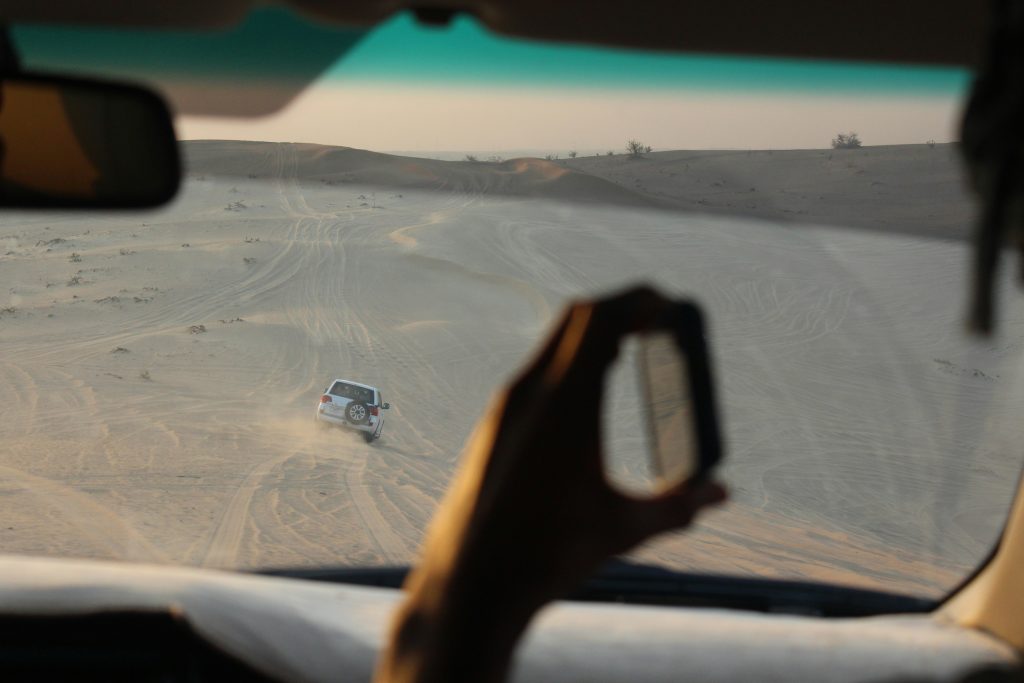
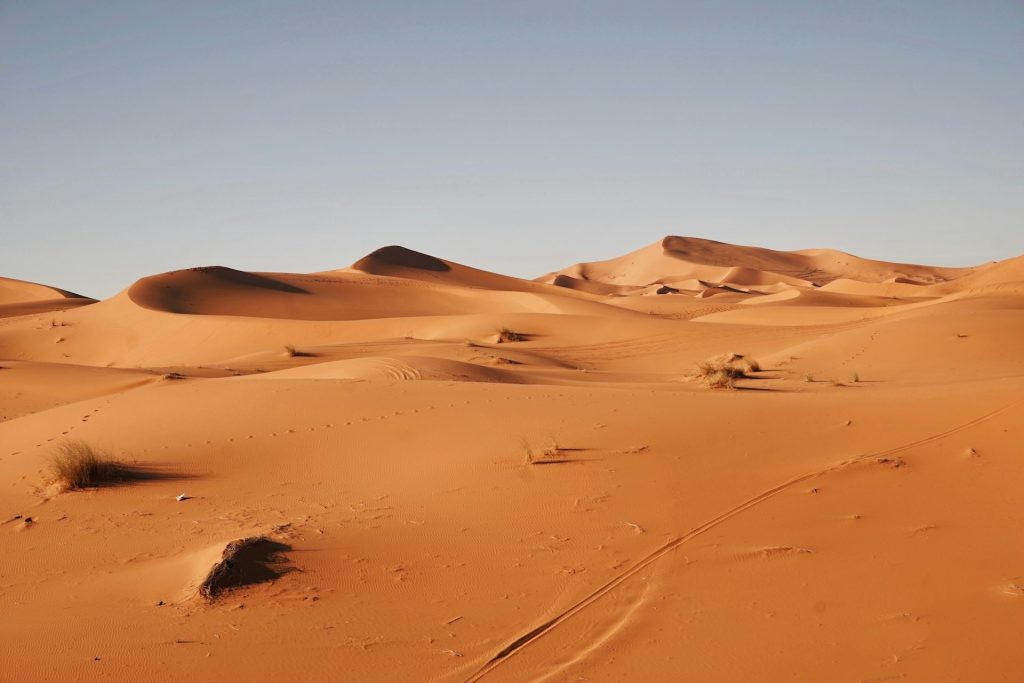
It’s hard to describe the feeling of approaching a desert to someone who has never seen one before. You can describe what you see; a drying of landscape, a browning of land and a slow disappearing of trees and shrubs and signs of life. Before, all of a sudden, the dunes appear. A sea of golden waves that appears to have no beginning and no end. You can show pictures and write words but portraying that feeling is harder. Perhaps it’s one of those things, like seeing the ocean for the first time, that you need to experience for yourself.
I’ve approached deserts before; Mongolia’s Gobi, India’s Thar, Egypt’s Western Desert. All were powerful and desolate and imposing. Yet still, the Sahara felt different. Perhaps it was the knowledge from our guide Mustafa, who had descended from nomads in the South of Morocco. He had told us tales about the wanderers who call the Sahara home. And the closer we got to the desert, the more excited he had become, slowly swapping his city clothes for a turban and floor length royal blue Gandora. His smile had grown wider, his confidence with the people we met along the way was contagious.
Our first glimpse of the desert was in Midelt. A town placed strategically between the Sahara Desert and the Atlas Mountains. After days of being in Morocco’s imperial cities, it feels wonderful to escape the bustling medinas and enter a world filled with Kasbah’s, olive groves and clear skies. We take an afternoon walk through a local village filled with shy children and their Berber families. The old Kasbah, a grand yet worn down sandcastle sits at one end of the village. It lies empty now, instead, the families had rebuilt their homes across green fields and a small river. The new village still had the feeling of a Kasbah, sandy in colour and each winding corridor cooling from the midday sun. Children ran through the streets, finding a particular joy in trying on our sunglasses and having their picture taken with them on.
At sunrise, light floods the valley and shimmers on a faraway village I can see from the window of my room. Any sign of haze above the mountains had cleared and the snow topped peaks of the High Atlas stand majestic above the village. It’s the first view of the trip which has taken my breath away, but as we prepare to head into the Sahara, I have a feeling there will be many more to come.
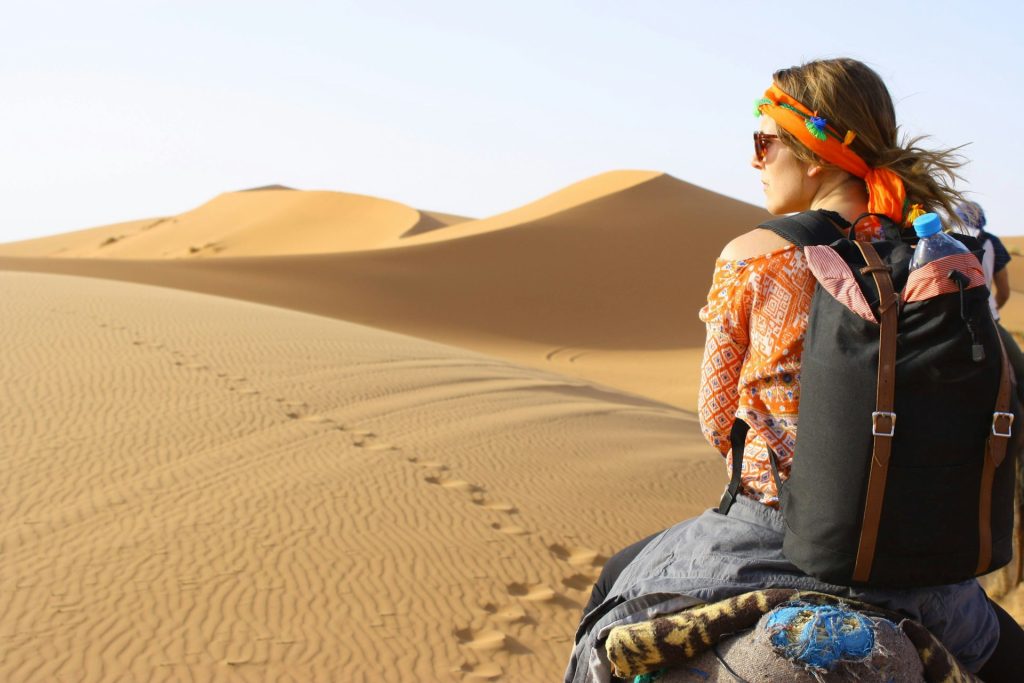
Indeed, the desert is a place of contrasts, and there’s no greater example of that than out here in the Sahara, the world’s greatest. A place of solitude and intense heat. Yet also a place of music, stories, cultures and traditions. While a short trip might show vast landscapes and huge skies, it’s the people that call this place home which are the only ones who can truly understand the Sahara. The nomads who know what each of the stars in the milky way mean. The people that know which way to pray at sunrise and which way to walk the camels back to civilisation and phone signal. It was our short encounters with these people which had made the Sahara much more than any desert I had seen before. For now, I can attempt to relive that feeling through photographs, the melodies of Tinariwen and a silver Berber compass which hangs in my room.