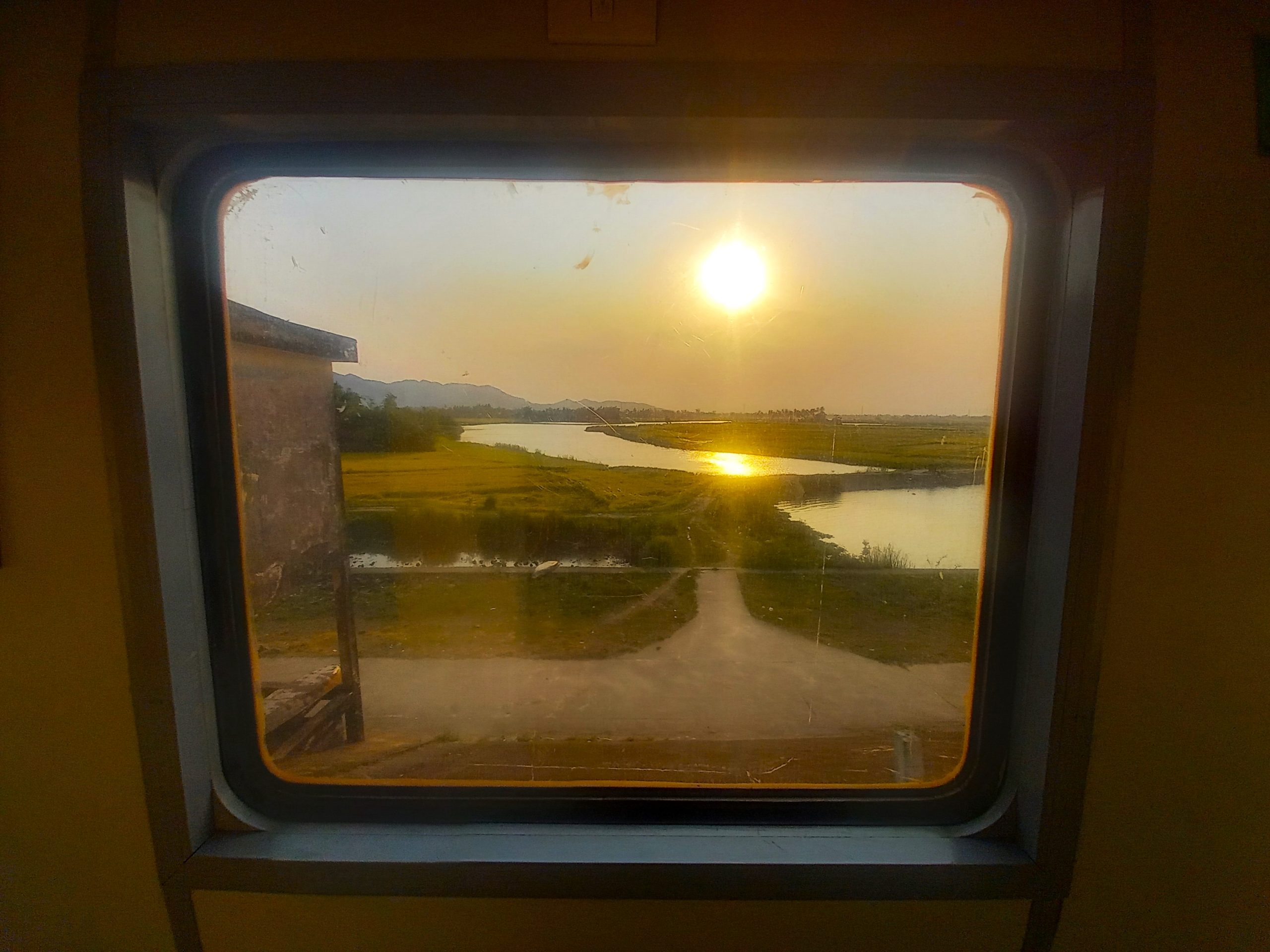
Train journeys in Vietnam are more than just a means of getting from A to B: they are an experience. On Vietnam’s railways, travellers get a genuine sense of the country and start to appreciate nation-defining characteristics, such as changes in the landscape, climate, food and accent from one region to another. Unlike taking a domestic flight, train travel is richly rewarding, providing travellers with a social, culinary and cultural experience. Taking the train in Vietnam is nothing like it is in Europe, North America, Japan or China: rail travel in Vietnam is low-tech, slow, informal, and exciting. What’s more, train travel is relatively cheap, comfortable, efficient and easy to book. If you enjoy journeys and the act of travel, you’ll almost certainly enjoy travelling by train in Vietnam.
Routes & Schedules
Vietnam Railways operates a main south-north line and several spur lines. There are dozens of potential routes and station stops across the nation: use my train map for an overview. Schedules, times and ticket prices are easy to search, browse and book using the Baolau.com search box below, or vnr.com (the Vietnam Railways website), or at any major train station where the national train schedule is displayed on large billboards.
Reunification Express (Transindochinois):
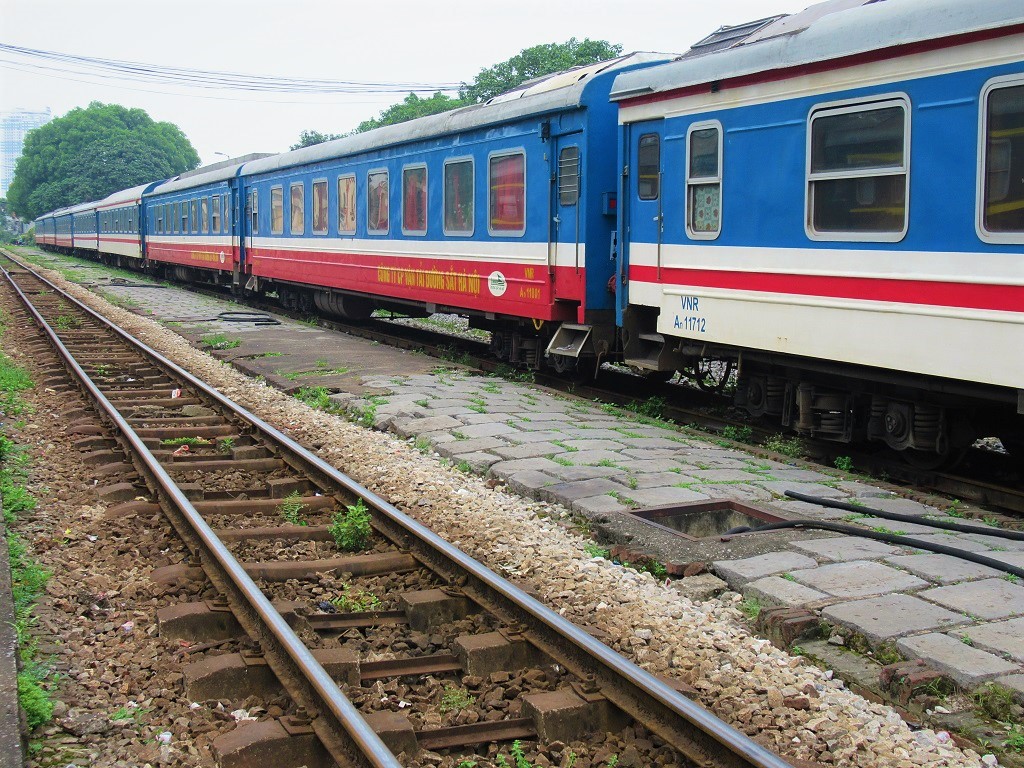
Vietnam’s main railway line runs from Saigon (Ho Chi Minh City) in the south all the way to Hanoi in the north, stopping at over 20 stations along the way. Roughly following the coast for over 1,700km, the south-north line connects almost all major coastal cities between Saigon and Hanoi (see map). This line is known today as the ‘Reunification Express’, and in French colonial times it was called the Transindochinois. There are at least 6 trains every day in both directions on the ‘Reunification Express’ between Saigon and Hanoi. The journey between the two cities takes more than 32 hours. In addition, several other trains ply specific sections of the south-north main line, stopping at smaller stations as well as major ones. You can easily check schedules, times and ticket prices by using the Baolau.com search box below or vnr.com or at any major train station.
Spur Lines:
In addition to the main south-north ‘Reunification Express’ route, several spur lines branch off to other destinations. These include: Hanoi→Hải Phòng, Hanoi→Lào Cai, Hanoi→Lạng Sơn, Hanoi→Hạ Long, Hanoi→Thái Nguyên, and Saigon→Phan Thiết. However, schedules on these spur line routes are irregular and subject to change, particularly in the post-pandemic period. Check schedules, times and ticket prices using the Baolau.com search box below or vnr.com or ask at the relevant train stations.

Booking Tickets
Booking train tickets is now very easy and efficient. You can book tickets directly from this page on almost all train routes in Vietnam by using the Baolau.com search box below. Type in your departure and arrival stations and the date of travel and click ‘Search’. This opens a new page with all train times and prices in all classes for that day and that route. Choose your train time and class then click ‘Book Now’. Next, choose your exact carriage, seat or sleeping birth on the train map, enter your details and make payment online. You’ll receive an e-ticket with a QR code in your email inbox which you can show to station staff on your phone before boarding the train. Your ticket has a carriage number and seat/bed number on it.
Alternatively, you can book tickets in-person at any train station, but not much English is spoken, or you can use vnr.com (the Vietnam Railways website) to make a booking, but their site is not as good or as easy to use as Baolau.com. (Note that there’s a small service charge with Baolau.com, but this is a very small price to pay for the convenience of using their system.)
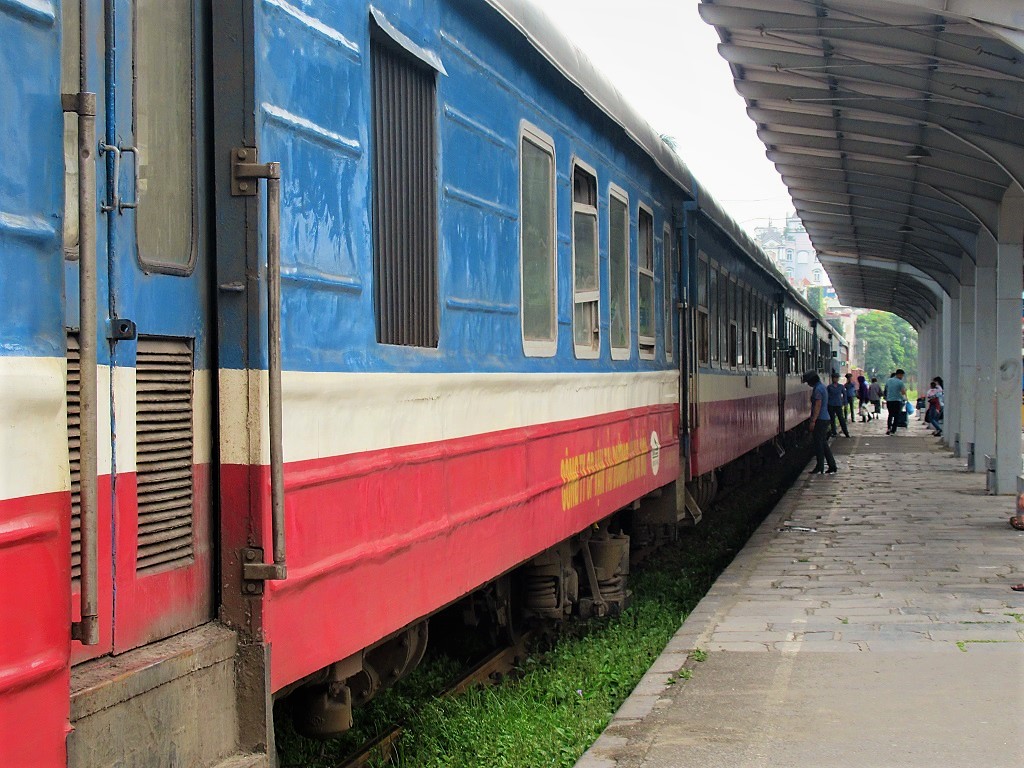
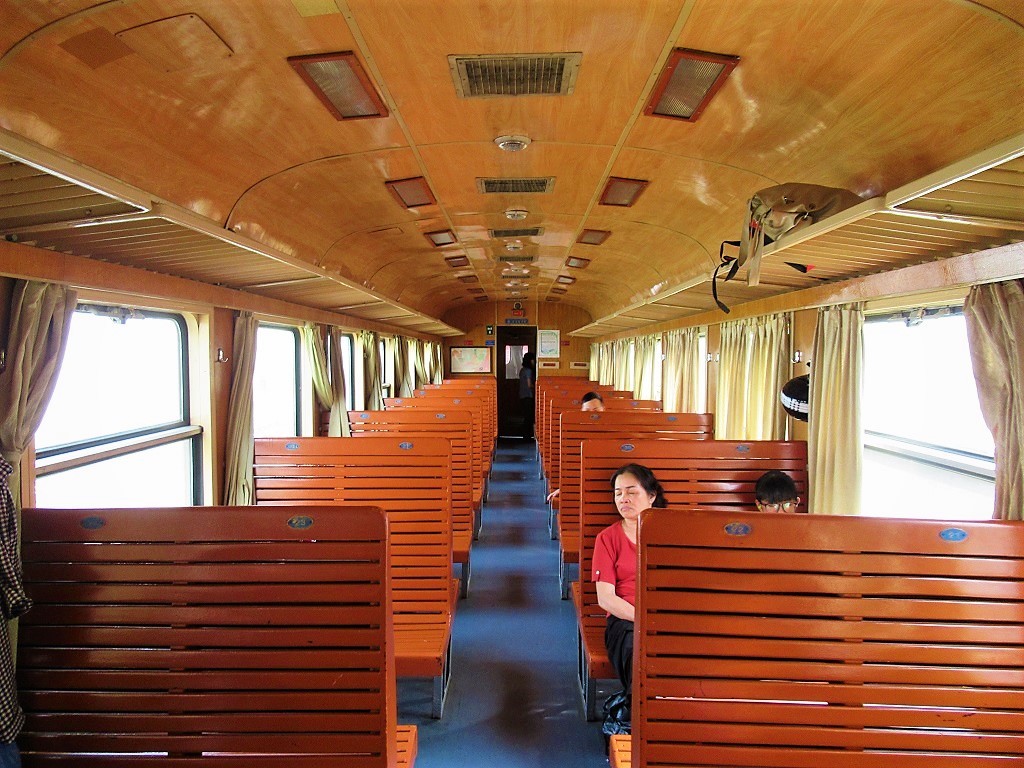
Hard Seat:
Typically the last couple of carriages on a train, the hard seat class is the cheapest and sparsest available on Vietnam’s railways. The wooden seats are absolutely fine for shorter journeys, such as Hanoi→Hải Phòng or Hanoi→Lạng Sơn. But on longer trips the carriages, which are fan-cooled, not air-conditioned, can become stuffy and uncomfortable. However, the ambience is informal and social: families with kids playing in the aisles, picnics on the floors, and chickens in cardboard boxes. On short hops this can be a good experience; on long-hauls it can be a test of endurance.
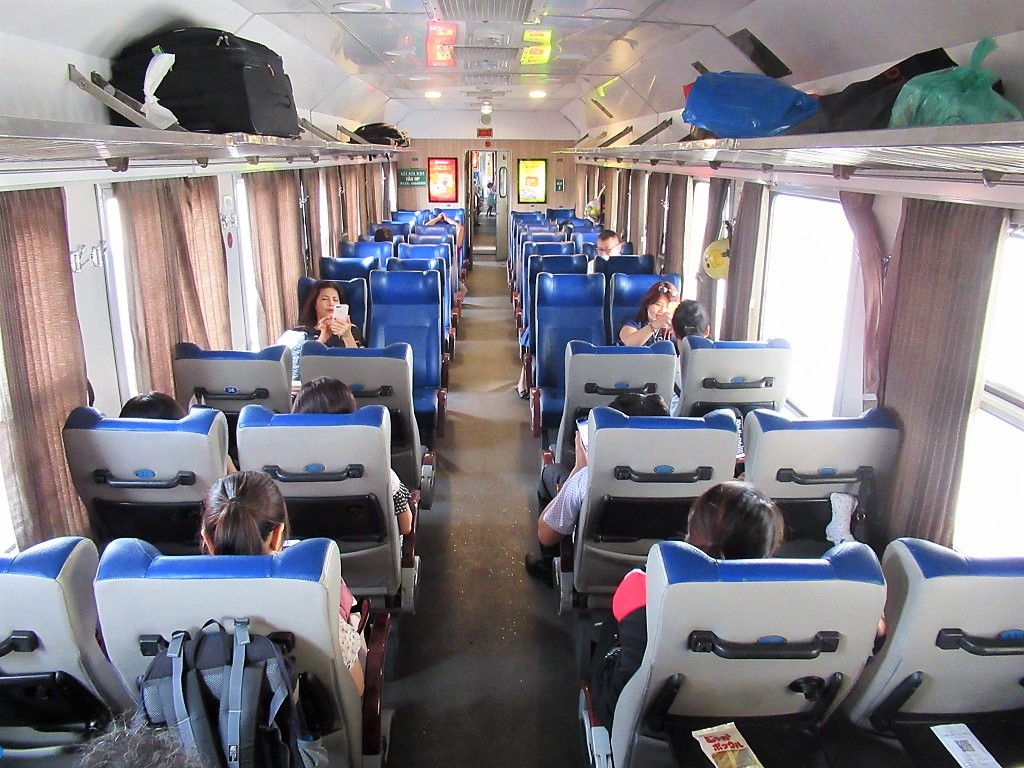
Soft Seat:
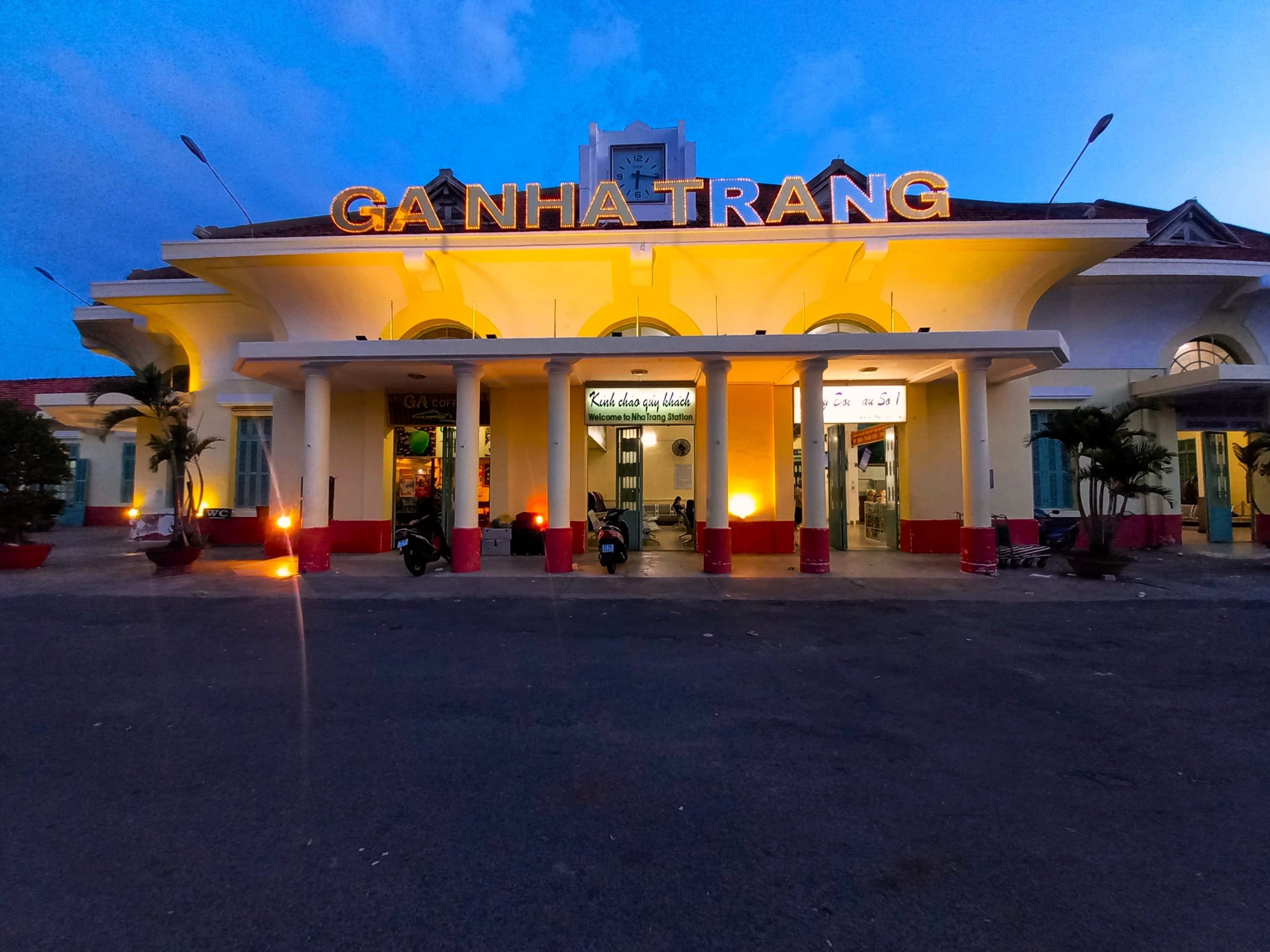
Soft, coach-style seating on reclinable chairs in an air-conditioned carriage, the soft seat class is ideal for daytime journeys of a few hours or more. Comfortable, cool, bright and spacious, most passengers will be fine in one of the soft seats for any medium-length journey. The windows are large, the ceilings are high and the air-con is effective. Ticket prices are reasonable and more affordable than sleeping compartments, but if you’re travelling overnight, don’t expect to get too much sleep in a soft seat. For daytime journeys on routes such as Huế→Đà Nẵng, Saigon→Nha Trang, Quy Nhơn→Đà Nẵng, soft seat class is all you need.
6-Bed Sleeper:
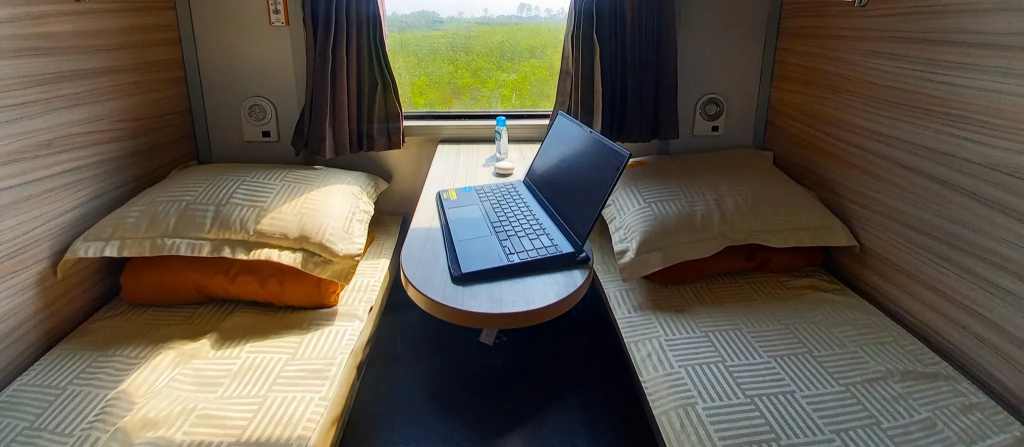
Separate air-conditioned compartments of 6-beds connected by a common aisle, this class allows passengers to lie down in comfort, but it can feel a little cramped if all 6 beds are occupied. The beds are arranged in two rows of bunks. Try to avoid taking the top bunk bed, which has very little space between the bed and the ceiling and can be mildly claustrophobic on long journeys. On night journeys, the middle bunk is best for sleeping, but on day journeys, the bottom bunk is best for comfort, because you can sit-up or lie-down and see out of the window. In my opinion, 6-bed sleeper class is good for shorter overnight journeys, such as Hanoi→Lào Cai or Saigon→Nha Trang. There is also good potential for social interaction as you are sharing quite an intimate space with 5 other passengers. Clean linen, a blanket and a pillow are provided.

Food & Drink
Eating and drinking on Vietnamese trains is nothing like it is on European or North American railways. Vietnam’s dining culture is sophisticated, regionally diverse, highly social, affordable, and oftentimes very informal. This is as much the case on the railways as it is in normal, everyday life. Most trains have a dining car (usually towards the back on the train), food and drink trolleys which regularly ply the aisles in all classes, and a hot water dispenser at the end of every carriage. In addition, passengers are allowed (and the majority do) to bring their own home-cooked picnic food onboard for the journey. If that weren’t enough, vendors board trains at stations, walking up and down carriages shouting their wares – hot, local specialities – for a brief few minutes before the train departs. Finally, all stations have at least one coffee shop, a convenience store and food outlet.
As is the case in most culinary contexts in Vietnam, travellers with an adventurous palate, few dietary quibbles, and an open mind will get the most out of their dining experience on Vietnamese trains. Leave your preconceived ideas of dining etiquette, cleanliness and ‘morality’ at home.
There are several ways to eat and order food on trains. If you bring your own picnic, you may consume it at your seat or sleeping birth, but not in the dining car. The dining cars (some of which are fairly grimy) only seat about a dozen passengers and they can become quite rowdy and cramped at mealtimes. However, there’s something undeniably romantic about railway dining cars. Sit down and order a drink (coffee, soda, beer), a snack (hard boiled eggs with salt and pepper, fresh green, sour mango) or a meal (hot phở or hủ tiếu noodles or steamed rice with stir-fried vegetables, meat, fish and soup) and watch the landscape roll by.
Alternatively, wait for the meal trolleys to reach your seat or sleeping compartment. Fresh rice meals (cơm) are served from a large ‘hot trolley’, including a huge vat of piping hot steamed rice and half a dozen dishes to choose from. These are all on display, so passengers can easily point and order. Typically you’ll find the following dishes: stewed pork (thịt kho), marinated pork cutlet (sườn), pork rolled in aromatic betel leaves (chả lá lốt), fried fish (cá chiên), and fried spring rolls (nem rán). Prices are 50,000-100,000vnd ($2-$4) per meal. Although there aren’t really any vegetarian or vegan options, you can try saying Tôi ăn chay (I’m vegetarian). All the food is freshly cooked, unlike the factory-prepared, vacuumed-packed items sold on UK trains, for example.
In addition, regional specialities are loaded onto the train at different stops along its route and then sold to passengers. This is a remarkable, unique, endearing and very Vietnamese aspect of railway dining. Some examples are: steamed whole corn on the cob at Long Khánh station from the fields outside your window; wonderfully exotic dragon fruit at Bình Thuận station from the plantations you can see from the train; bánh nậm (delicate steamed rice cakes) at Huế station; and nem chua (delicious cured pork sausages) at Thanh Hóa station.
The Journey
Departing from train stations in Vietnam is always exciting, but particularly on early morning departures or night trains. There’s an atmosphere on the platform: the sound of the locomotive humming as if steeling itself for the long journey ahead; the flow of people through the station entrance and into the carriages; the sense of expectation; the hoot of the horn before departure; and the slow, grinding shift of motion echoing from carriage to carriage as the train crawls out of the station. Moving through the city at processional speed everything stops to let the train by, watch it go, honour it as it passes: traffic on the city’s busy arteries comes to a standstill at level crossings, pedestrians look up from their meals, stop their work, look out of windows trying to catch a glimpse of the train as it parades by.